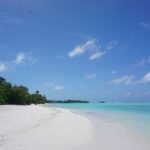

Mauritius public beach access is a fundamental right for everyone, tourists and locals alike. If you’re visiting the island, you may notice many hotels, villas, and even some exclusive-looking properties lining the most beautiful stretches of coastline. You might even wonder if that sandy bay is off-limits to anyone but hotel guests. Let me clear that up: every single beach in Mauritius is, by law, public. Here’s exactly what that means for your next beach day, wherever you choose to lay out your towel.
Key details every tourist should know
- All beaches in Mauritius are public, no exceptions, even in front of hotels or villas.
- Official government reminder: June 25, 2026, the Ministry of Housing and Lands has reiterated these rights.
- You are legally allowed to walk, sit, picnic, swim, and relax on any beach.
- No hotel, villa, or private property can block your access to the beach itself.
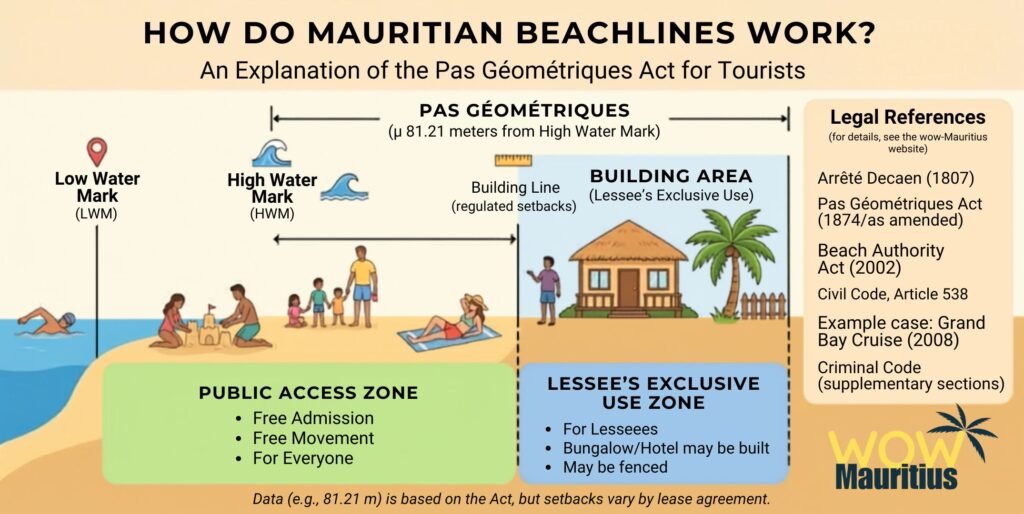
- Hotels and villas may lease land up to the high-water mark, but that does not make the beach itself private.
Mauritius Public Beach Access: Your Actual Rights
On June 25, 2026, the Ministry of Housing and Lands issued a clear reminder: every member of the public, including tourists, can freely walk, sit, picnic, swim or just take in the sea breeze on any Mauritian beach. If you’re used to private beaches in other travel hotspots, Mauritius has a different outlook. Here, the entire shoreline is for everyone’s enjoyment, whether you’re a visitor from abroad or a local family.
People often ask me if that means you can just stroll straight through a hotel lobby to reach the sand. Not quite. Businesses have the right to control their own buildings and private landscaped grounds, but the sandy beach is another matter. The Government has clarified time and again: having a hotel or villa on the waterfront does not turn the beach in front of it into private land. You have the same right to use that strip of sand as anyone else.
Mauritius Trip Planner
Finding Your Way Onto the Beach
That said, the practical reality on the ground can be a bit trickier. At a few busy resorts, access paths aren’t always well signposted and it sometimes looks like only hotel guests are allowed. But the law is on your side. Public accessways (usually signposted or visible on local maps) connect the road to the beach, even between large hotel properties. If a gate seems shut or a staff member suggests otherwise, politely mention that you’re using the public access. Mauritians are generally warm and welcoming when you approach it that way.
I’ve seen families and solo travelers get nervous in front of a hedge or a grand entrance, don’t be put off. It’s not uncommon for beachside properties to appear exclusive at first glance. If in doubt, check the Beach Authority’s official website for public access maps or ask a local. In smaller towns or outside the major tourist hubs, you’ll probably spot the community picnic spots and parking just inland from the shore.
Boundaries: Where Public Ends and Private Begins
Understanding where public access stops is simple: the beach itself (from the vegetation line to the sea, sometimes marked by the high-water line) is always public. Private land begins inland, behind the legal demarcation. While you can’t wander into hotel gardens or private terraces, the sand and sea are for everyone. If a property claims any section of the sand as “hotel guests only,” they’re stretching the truth, and you’re allowed to stay, swim, or stroll along that patch of coast. For more guidance about practicalities around the beachfront, the Mauritius travel forums often share up-to-date advice from recent visitors.
Tips for Your Beach Day
- Bring your own towel and picnic if you’re using the public sections (hotel sunbeds and service areas remain reserved for guests).
- If you need bathrooms or food, look for the nearest public facilities or beach kiosks.
- Respect common courtesy: keep the sand clean, avoid loud music, and greet locals with a smile, Mauritians love their beaches too.
- The law applies island-wide: from Flic en Flac to Belle Mare, Pereybere to Le Morne.
Why This Matters: Free and Equal Enjoyment for All
Mauritius stands out for its public beach policy. No matter where you stay, you can explore the entire coastline. This means spontaneous day trips are easy, you’re never stuck with a single crowded stretch of sand or paying extra just to dip your toes in the Indian Ocean. The government’s recent June 2026 statement keeps this tradition alive, making Mauritius not just a resort destination but an island where the sea is everyone’s to enjoy. In my years here, I’ve watched local families mixing with visitors all across the coast, it’s part of the beauty of everyday life in Mauritius. Don’t miss out on the freedom: every beach really is yours to enjoy.
Source: ION News
Frequently Asked Questions
Are all beaches in Mauritius really public for tourists?
Yes. By law, all beaches in Mauritius are public, meaning you can walk, swim, picnic, and relax on any stretch of sand, regardless of nearby hotels or villas.
Can a hotel or villa stop me from going onto a beach?
No. The beach itself is always public, even in front of hotels or villas. Private properties may control their own buildings, but not the beach.
How do I find a public beach access if the way looks blocked?
Look for signposted public pathways, check the Beach Authority website for maps, or ask locals for the closest public access point.
Can I use hotel sunbeds or facilities if I'm not a guest?
No, hotel facilities like sunbeds and restaurants are for guests only, but you can use the sand and sea in front of any hotel.
Tour the island and discover Mauritius’s shoreline your way—the beaches are open to everyone. Book a coastal tour or explore hidden bays with MauritiusEvents.com.
Explore island sightseeing tours →